

The NEMAR ecosystem
NEMAR is not a single application. It is a set of cooperating systems that make neuroelectromagnetic data easier to publish, find, inspect, compute with, and cite. The command-line interface and the website are two clients of shared contracts; neither is a second source of truth.
The one-minute map
Section titled “The one-minute map”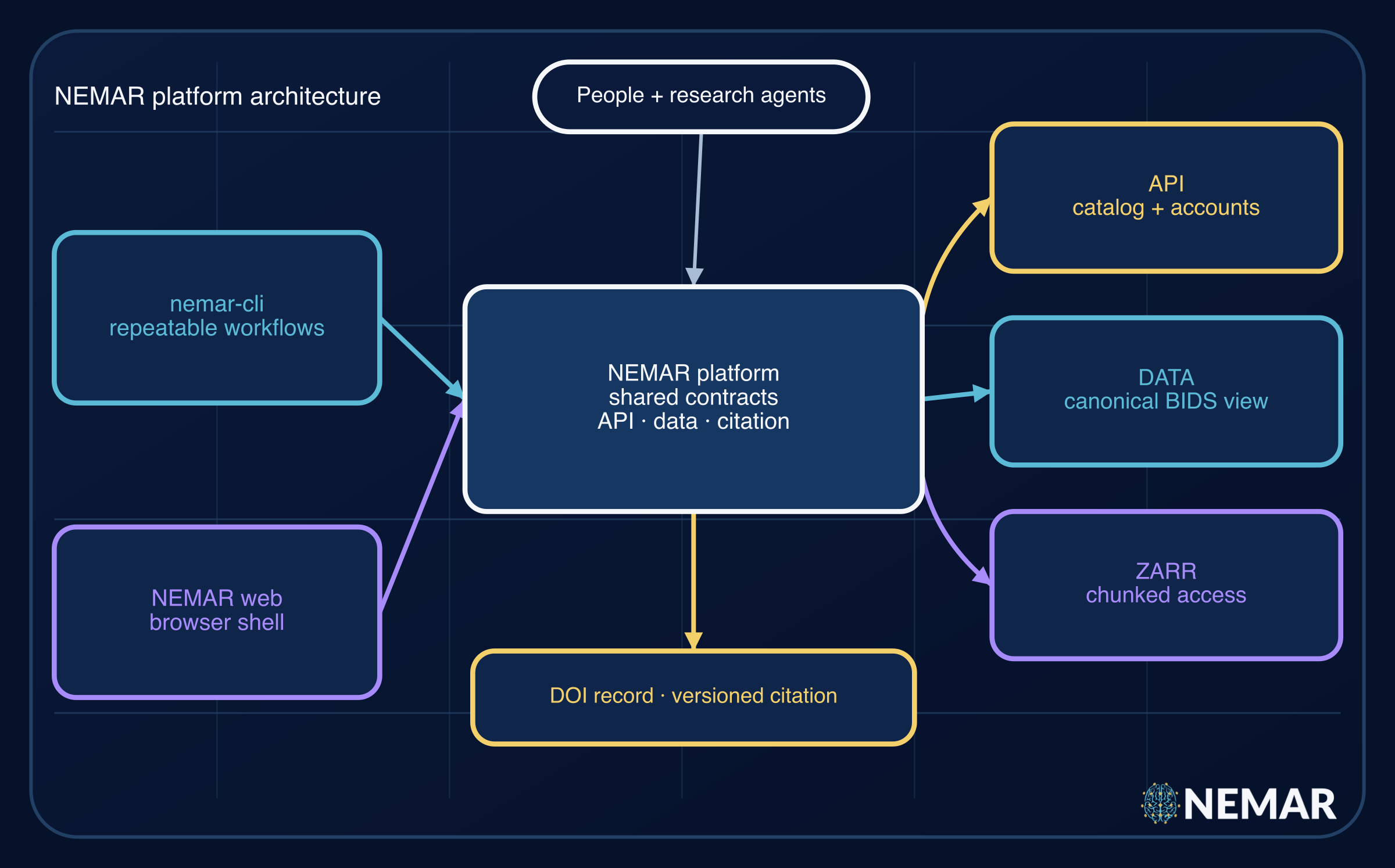
Figure 1. The same platform contracts serve repeatable terminal workflows, browser discovery, and future machine-facing research tools. The diagram uses exact labels and distinguishes the canonical data plane from derived Zarr access.
Surfaces
Section titled “Surfaces”| Part | URL | Role | Docs |
|---|---|---|---|
| CLI | nemar | Upload, validate, version, download, and manage datasets from the terminal | CLI |
| Backend API | api.nemar.org | Auth, dataset lifecycle, admin, publication, DOIs (Cloudflare Workers + D1) | Platform API |
| Data plane | data.nemar.org | Public dataset files, version manifests, records.json, archive zips | Data API |
| Dataset browser | nemar.org | The dataset browser (Astro) | external |
| Zarr serving plane | zarr.nemar.org | Derived, chunked access used by the in-browser signal viewer where conversion is available | Zarr and edge access |
| MCP server | mcp.nemar.org | The archive as six callable tools, for AI assistants and agents that speak Model Context Protocol (MCP) | For agents and tools |
| Scholarly record | DOI landing pages | A durable concept identity and precise version citations | DOI and versioning |
Not sure which of those you want? Which surface should I use? is the decision page: what each surface is for, and why not one of the others.
How a dataset flows through NEMAR
Section titled “How a dataset flows through NEMAR”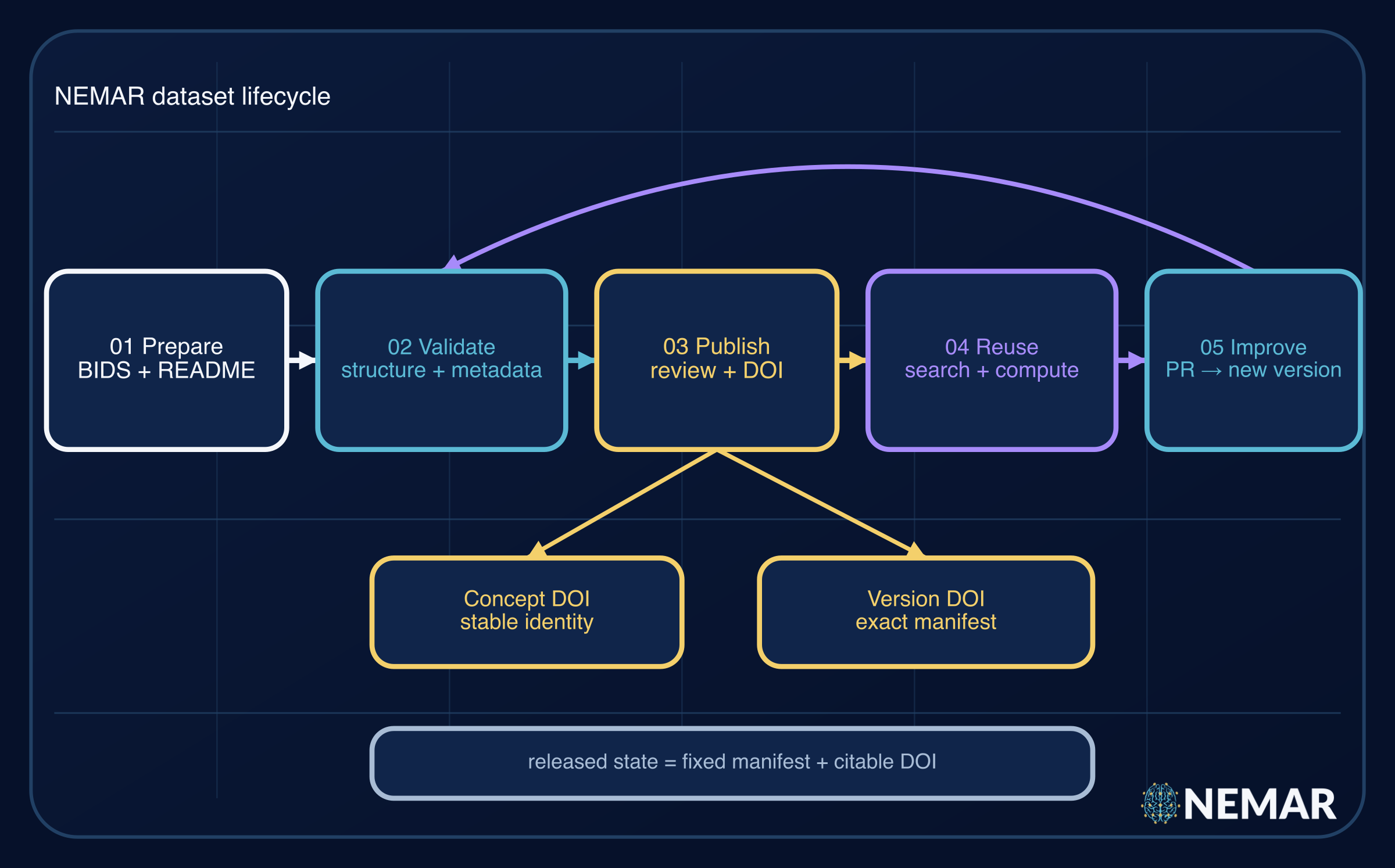
Figure 2. A release is a fixed, citable state. A later improvement becomes a new version rather than silently changing the object that an earlier analysis used.
- A researcher prepares a BIDS dataset and validates it with the CLI.
- The CLI or website registers the dataset through the backend API, which creates a private GitHub repository for metadata and git-annex pointers and provisions S3 storage for data blobs.
- Data files upload to S3; metadata is versioned in GitHub.
- Review creates a concept DOI; the researcher cuts versioned releases, each with its own version DOI.
- On publication the dataset becomes public on the data plane (
data.nemar.org) and is surfaced in the browser (nemar.org). - Where conversion is available, recordings are represented in a derived Zarr serving copy for partial browser reads.
Where to go next
Section titled “Where to go next”- Not sure which surface fits your task? Read Which surface should I use?.
- New to NEMAR? Start with the CLI installation guide.
- Read the mission and vision for the public purpose and open science commitments.
- Compare the CLI and web workflows.
- Building against the API or pulling data programmatically? See Platform & APIs.
- Learn how Zarr and edge access support responsive reads.
- Use the guide for agents and tools when writing a client or research assistant.
- A NEMAR administrator? See the admin documentation (access-gated).